Reduction of Salmonella and Listeria risk through the use of Bactoferm® SM-194 culture
Study objective
Evaluation of the effectiveness of Bactoferm® SM-194 in reducing the risk of contamination with Salmonella spp. and Listeria monocytogenes in fermented sausages, by monitoring key parameters: pH, water activity (aw), and microbial load reduction throughout the fermentation and drying process.
Bactoferm® SM-194, a solution that provides producers with an effective tool for food safety control while maintaining the desired sensory profile.
Methodology
- Enhances red colour intensity.
- Tested products: semi-dry and dry-cured sausages.
- Inoculation with cocktails of Salmonella spp. and Listeria monocytogenes (~2×10⁷ cfu/g).
- Fermentation at ~27–32 °C until pH ≤ 5.3.
- Drying to aw ≤ 0.92 (semi-dry) or ≤ 0.89 (dry-cured).
- Monitoring of pH evolution, aw, and bacterial reduction at each stage.
- Sampling at every critical step (post-fermentation, mid-dry, final dry) for precise microbial quantification and confirmation of log reductions.

Study results
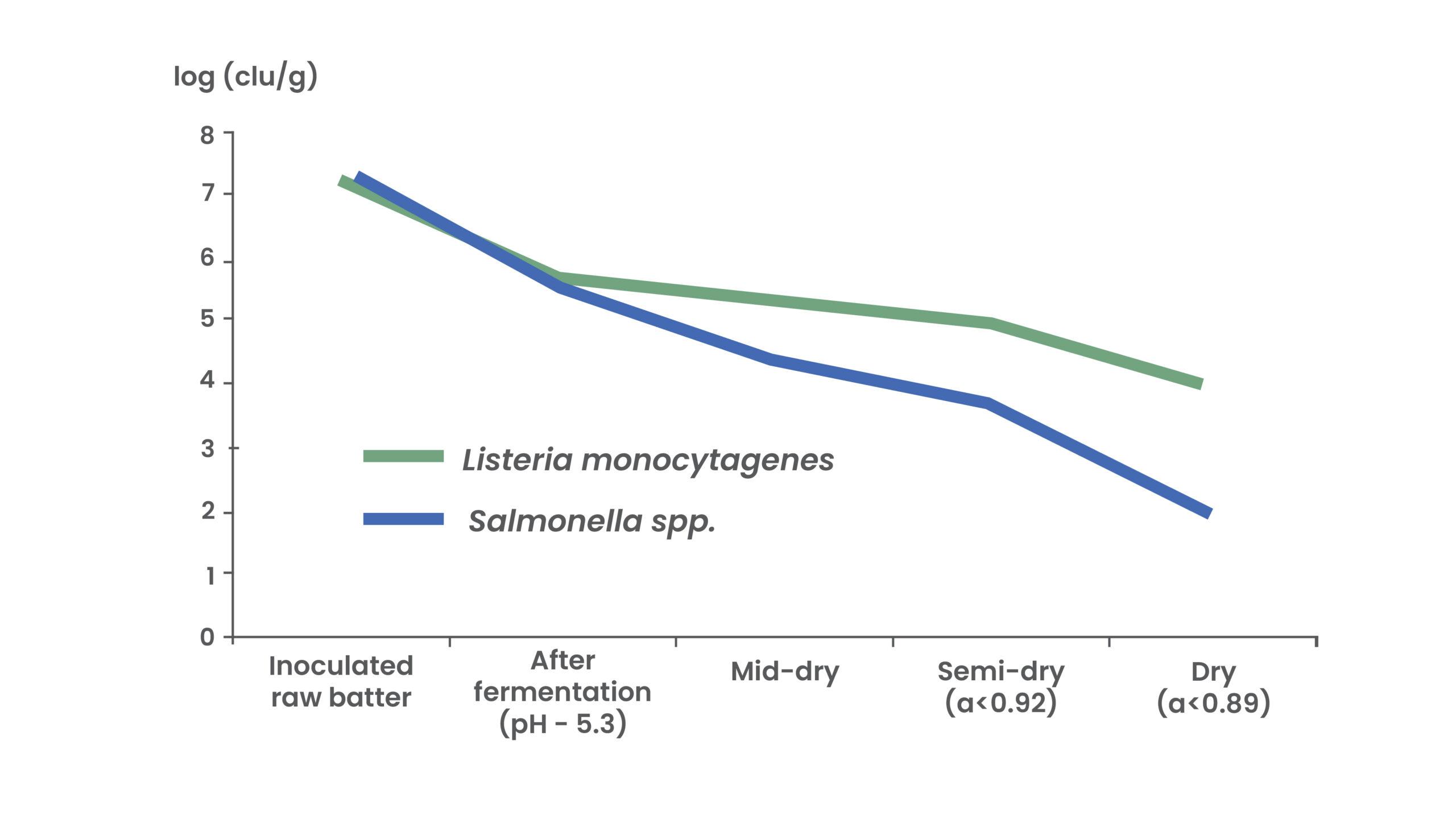
Reduction of Salmonella spp.
- In semi-dry sausage (aw < 0.92): ~3.5 log reduction.
- In dry-cured sausages (aw 5 log reduction.
Reduction of Listeria monocytogenes
- Up to aw ≤ 0.92: >2 log reduction.
- Up to aw ≤ 0.89: >3 log reduction.
Technological parameters
- Rapid pH drop below 5.3 - driven by culture activity
- Efficient drying, with a steady decrease of aw toward safe values.
Producer advantages
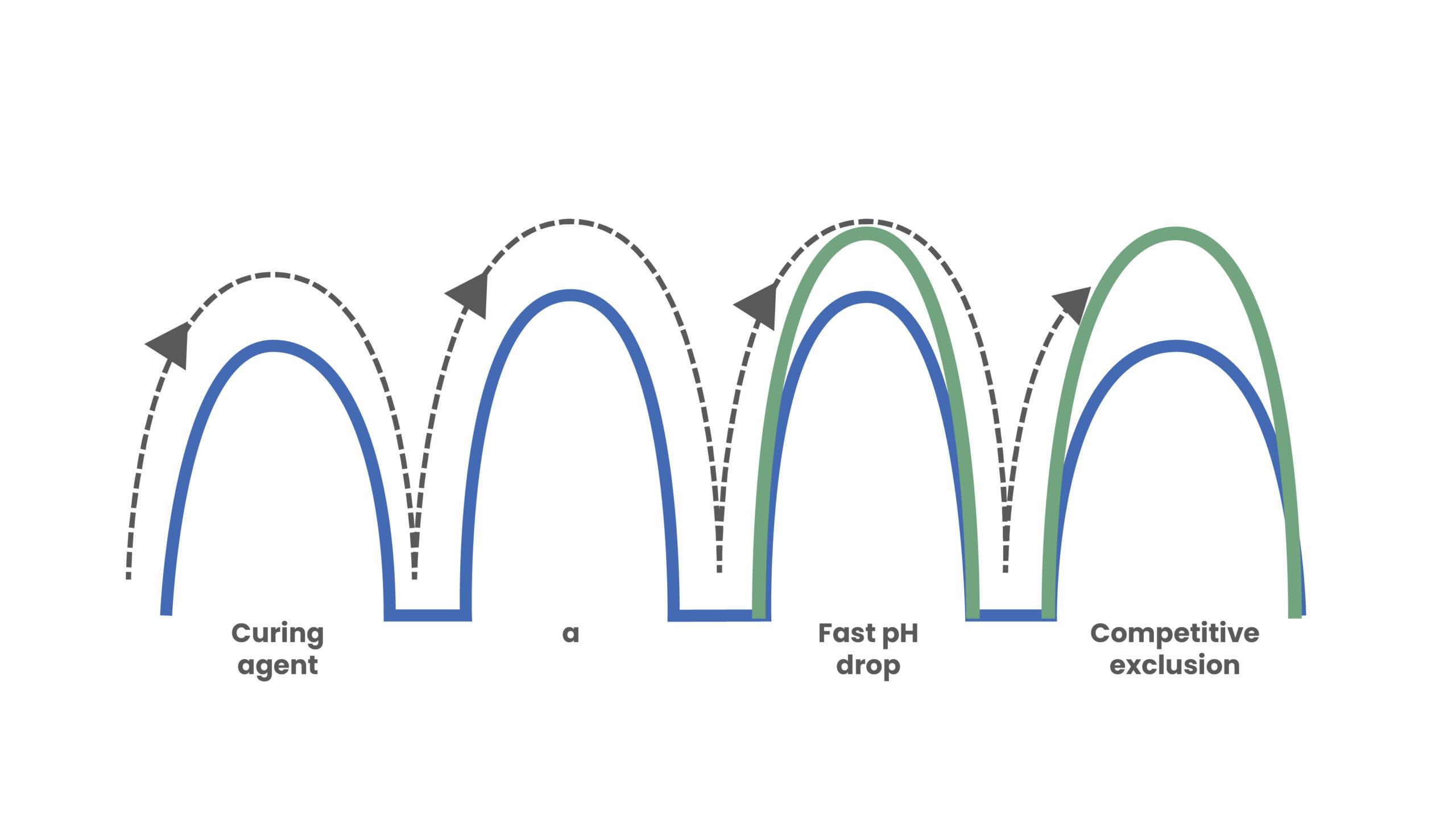
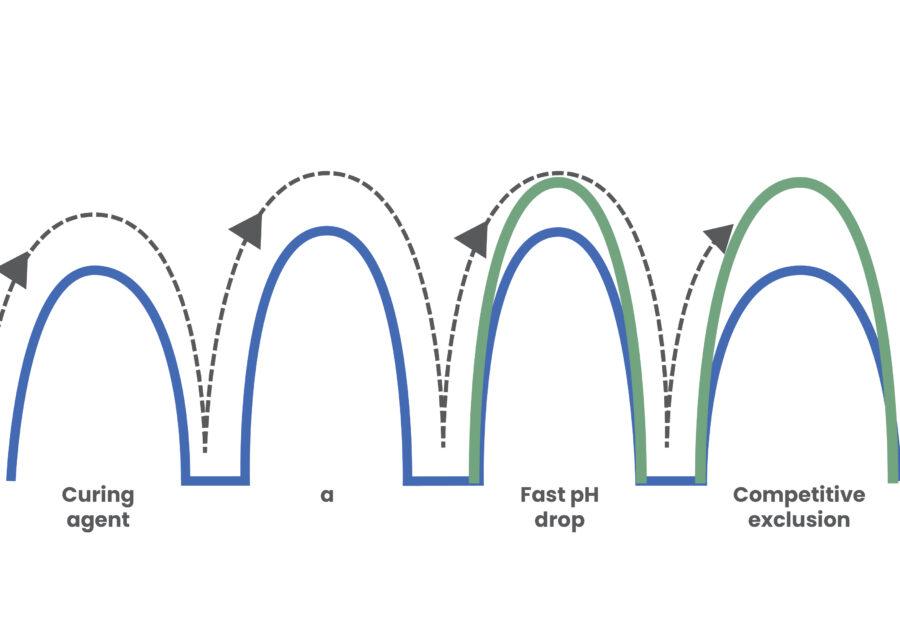
- Effective application of the “hurdle technology” concept: acidification + drying + starter culture → high safety.
- Elimination or significant reduction of Salmonella and Listeria risks without the need for aggressively added preservatives.
- Ensuring consistent quality between batches (safety + stable sensory profile).
- Potential for marketing communication as a “safe, controlled product with high hygiene standards.”
The entire process using Bactoferm® SM-194 demonstrates that it is possible to obtain microbiologically safe fermented sausages, with significant reductions (≥5 log) in dangerous pathogens, without compromising product quality.